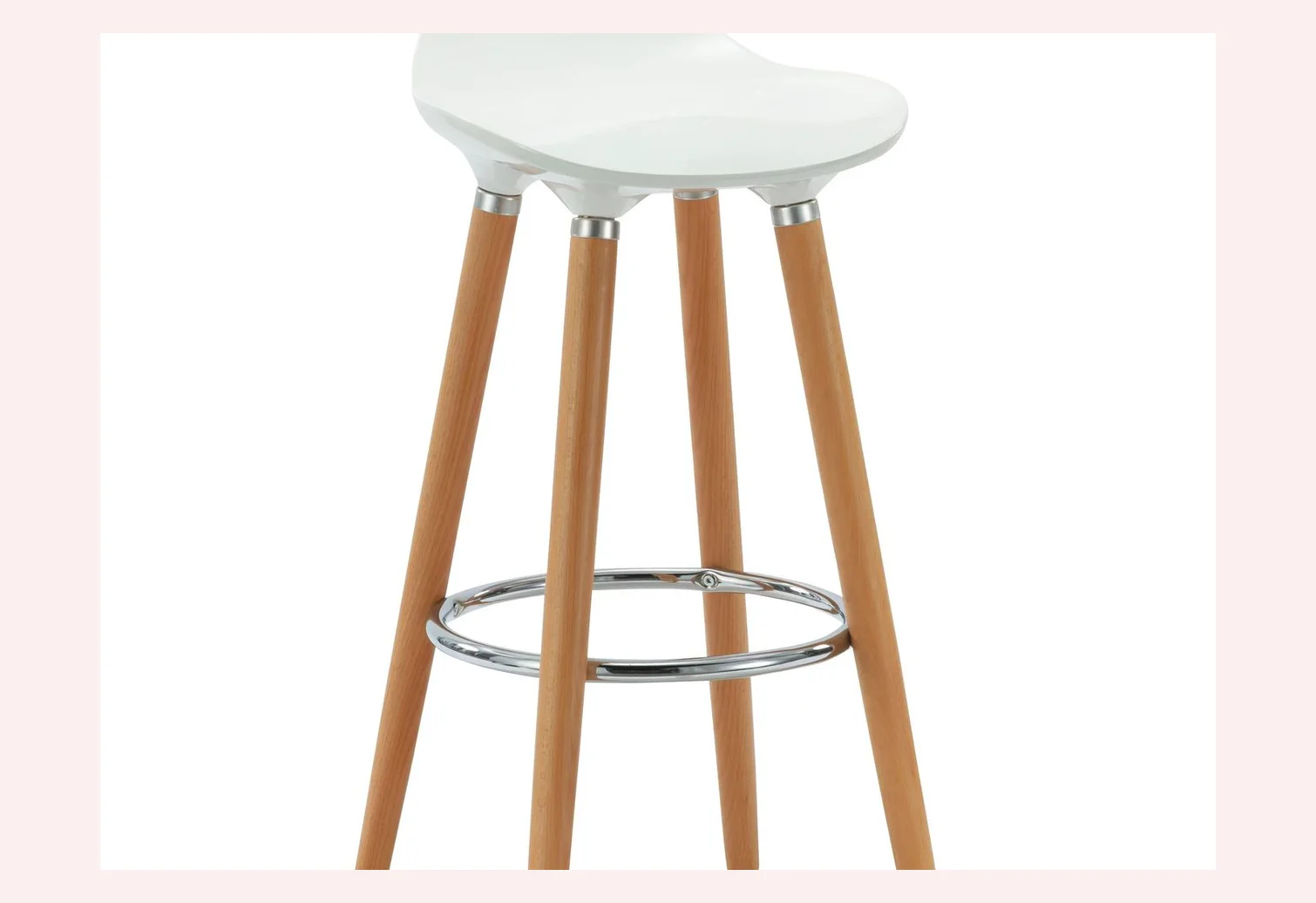
A large share of the stool demand we ship now is not for bars at all — it is for kitchen islands and home bars. And the single most common reason a stool comes back is boring: it is the wrong height for the counter. The fix is a set of numbers any importer can hold their supplier to, so here they are.
The two heights, in real numbers
There are two surfaces and two matching seat heights, and mixing them is what causes returns. A standard kitchen counter or island sits around 36 inches (about 90 cm) high, and the counter stool that fits it has a seat height of roughly 24 to 27 inches (61–69 cm). A raised bar surface sits higher, around 40 to 43 inches (about 105–110 cm), and a bar stool to suit it runs roughly 28 to 33 inches (71–84 cm) at the seat. The rule we use to sanity-check any order is the gap: you want roughly 10 to 12 inches between the seat top and the underside of the counter, so a person's legs fit without the counter cutting into them.
Why this matters more for the home market
A bar buying for a bar usually knows its counter height. A homeware importer selling online does not control the customer's kitchen, so the listing has to be unambiguous, and the stool has to actually hit the seat height it claims. We have seen returns spike on a program simply because a "counter stool" measured 28 inches at the seat — a bar height — and every customer with a standard island sent it back. On a counter and bar stool order we confirm the seat height on the sample and put it on the carton, because the measurement is the product.
The trade-off: fixed height or gas-lift
Here is the choice we lay out. A fixed-height stool is cheaper, sturdier and simpler — and for a homeware line where the customer picks counter or bar height at purchase, it is usually the right call. A gas-lift swivel stool adjusts to fit either surface, which is genuinely useful for a customer who is unsure or has an unusual counter, but it adds cost, adds a part that can wear, and adds a warranty line. We will not push gas-lift onto a budget home line that does not need it; we will recommend it where the adjustability actually sells. For swivel models we fit the gas lift to the duty rather than the price, the same way we spec the rest of a mixed order.
The third height people forget
There is a quiet third tier that catches importers off guard: the extra-tall or "spectator" height used at some kitchen islands with a raised back ledge, and the lower 24-inch perch some cafés use. We do not recommend stocking every height — that just spreads your inventory thin — but it is worth knowing they exist so a listing does not promise "fits any bar" when it really fits one band. If a customer base skews toward a specific counter height, we would rather build to that one band well than hedge across all of them and fit none perfectly.
Adjustability is the escape hatch here, which is exactly why gas-lift swivel stools sell well online: a stool that travels from roughly counter to bar height covers the customer who measured wrong. The cost is the cylinder and the moving parts, so we treat it as a deliberate trade rather than a default. For markets where the average user is heavier, we move the swivel models to a sturdier gas-lift class rather than ship a light cylinder that sinks under a year of daily use — the same duty-matching we apply across the office-chair line.
How we set it on your order
Tell us whether you are selling counter, bar or both, and we set the seat heights and footrest positions to match — footrests positioned for the actual seat height, not a single generic ring that leaves tall-stool users with nowhere to put their feet. If you want to stock both, we can split one order across the two heights and even mix in a few lounge pieces for a home-bar collection. We confirm the seat height on the physical sample and print it on the master carton, so your warehouse and your customer are reading the same number.
One more practical note for online sellers: put the seat height, the recommended counter height and the leg clearance in the listing in both inches and centimetres. Most "wrong height" returns are not a product fault at all — they are a listing that left the buyer guessing. Get the numbers in front of them and the return rate on a stool program drops on its own. We will give you the measured figures to publish rather than rounded marketing ones.
Send us your target market and whether it is island, bar or both, and we will quote the right seat heights with the measurements confirmed on the sample. Reach the export desk via our contact form or [email protected].