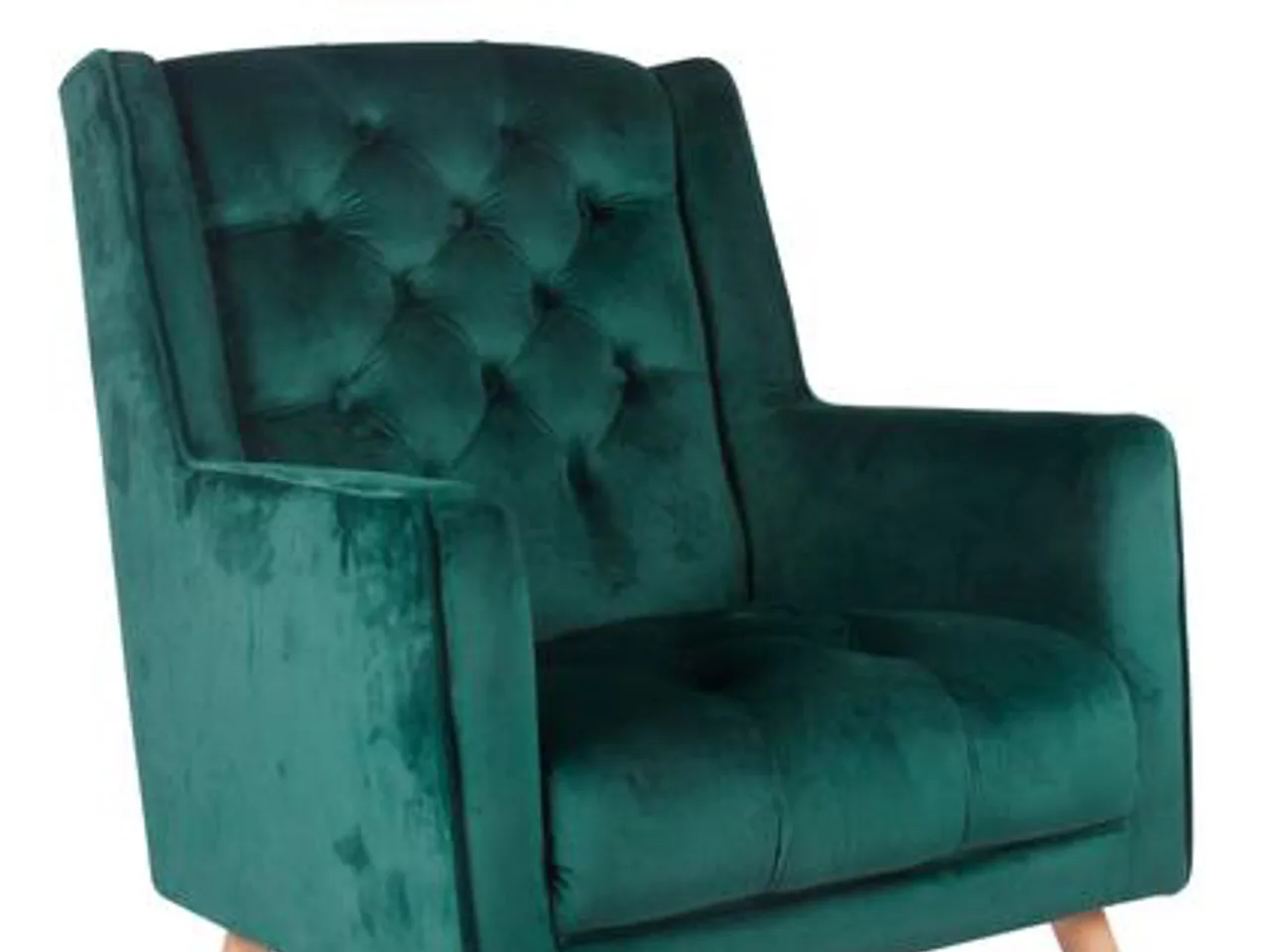
One of the reasons buyers come to Qiangsheng is that we run bar stools, office chairs and sofas and leisure chairs under one roof, so a single order can fill a container from three lines. Convenience is part of it. The bigger reason is that a well-planned mixed load can use the box better than a single-product container can, and that lowers your landed cost per piece. If you are new to the mechanics of packing seating for ocean freight, the guide on container loading for chairs covers the fundamentals well.
The cube you are really buying
A 40-foot high-cube container gives you somewhere around 76 CBM of internal volume and roughly 28,000 kg of payload. Seating is light and bulky, so you almost always cube out — you run out of space long before you run out of weight. That single fact governs a mixed load: the goal is to fill the space, not the scale. Knock-down stools and chairs pack into clean, stackable cartons — knock-down stackable seating runs around 0.05 to 0.06 CBM per unit, which is why you can fit well over a thousand chairs in a 40HQ when they ship flat.
Why mixing helps the cube
Here is the part single-line buyers miss. Sofas and assembled leisure chairs are bulky and full of empty space — a container of nothing but sofas wastes a lot of air. Stools and knock-down chairs are dense rectangles. Load them together and the small, regular cartons fill the gaps the soft seating leaves, so the same container carries more value than either product would alone. We plan the stack so the heavy, square stool cartons go low and the bulky sofa boxes ride above, and the door-end gap is filled with the items that flex on count.
Weight, balance and the bits that stop a claim
Cube is the headline, but a mixed load has two more things to get right. Weight distribution: even though seating cubes out before it weighs out, you still do not want all the heavy stool cartons stacked at one end — an unbalanced container is harder to handle and can shift in transit. We spread the dense cartons along the floor and build the lighter, bulkier sofa boxes on top so the load is stable end to end. Protection at the interfaces: where a hard stool carton sits against an upholstered sofa box, a scuffed or punctured sofa carton is the complaint that arrives, so we edge-protect and separate the soft seating rather than letting metal cartons grind against it for a five-week voyage.
Counting honestly across three lines matters too. It is tempting for a supplier to quote the theoretical maximum carton count, but a real container has a door-end gap, needs dunnage, and never loads to the perfect cube on paper. We quote a realistic figure for each line and would rather you have a little headroom on the re-order than be short because someone sold you a fantasy load plan. If you want, we will send the CBM per carton so your own freight forwarder can sanity-check the plan against the MOQ and packing notes we publish.
The trade-off: assembled vs knock-down across lines
The lever is the same one as on any seating order, and it is a real trade-off. Knock-down stools and chairs roughly double or more what fits versus assembled, and that is the right answer for a distributor with a warehouse and labour. But sofas mostly cannot knock down, and an assembled stool that arrives ready to use suits a buyer drop-shipping to small venues. So a mixed container is rarely all one way: we will often ship the stools and task chairs knock-down for the cube and the sofas assembled because they have to be, and we tell you the count for each rather than a single rosy number. We would rather under-promise the carton count than leave you short on a re-order.
The advantage that is not about cube
The other gain is coordination. One factory means one quote, one sample round, one inspection and one loading plan, instead of stitching a stool supplier, a chair supplier and a sofa supplier into the same vessel and praying their schedules line up. For a hospitality project kitting out a whole venue — bar stools at the counter, task chairs in the back office, sofas in the lounge — that single-source loading plan is the reason the container actually leaves on time. It is the same reason we scope the paperwork once across the whole order rather than per supplier.
When a 40HQ is too much for a first order, a 20-foot container or an LCL consolidation can still mix the lines, just at a higher cost per piece — we will be honest about where the break-even sits rather than pushing you to over-order to fill a big box. For a buyer testing a new venue concept, a smaller mixed shipment to prove the range often beats a full container of guesses. The point of running the lines together is flexibility, not forcing volume you do not yet need.
Send us the models and quantities across stools, chairs and soft seating, and we will return a real mixed-load plan for a 40HQ — cartons, CBM and the count for each line. Reach the export desk via our contact form or [email protected]. The full range is on our products page.