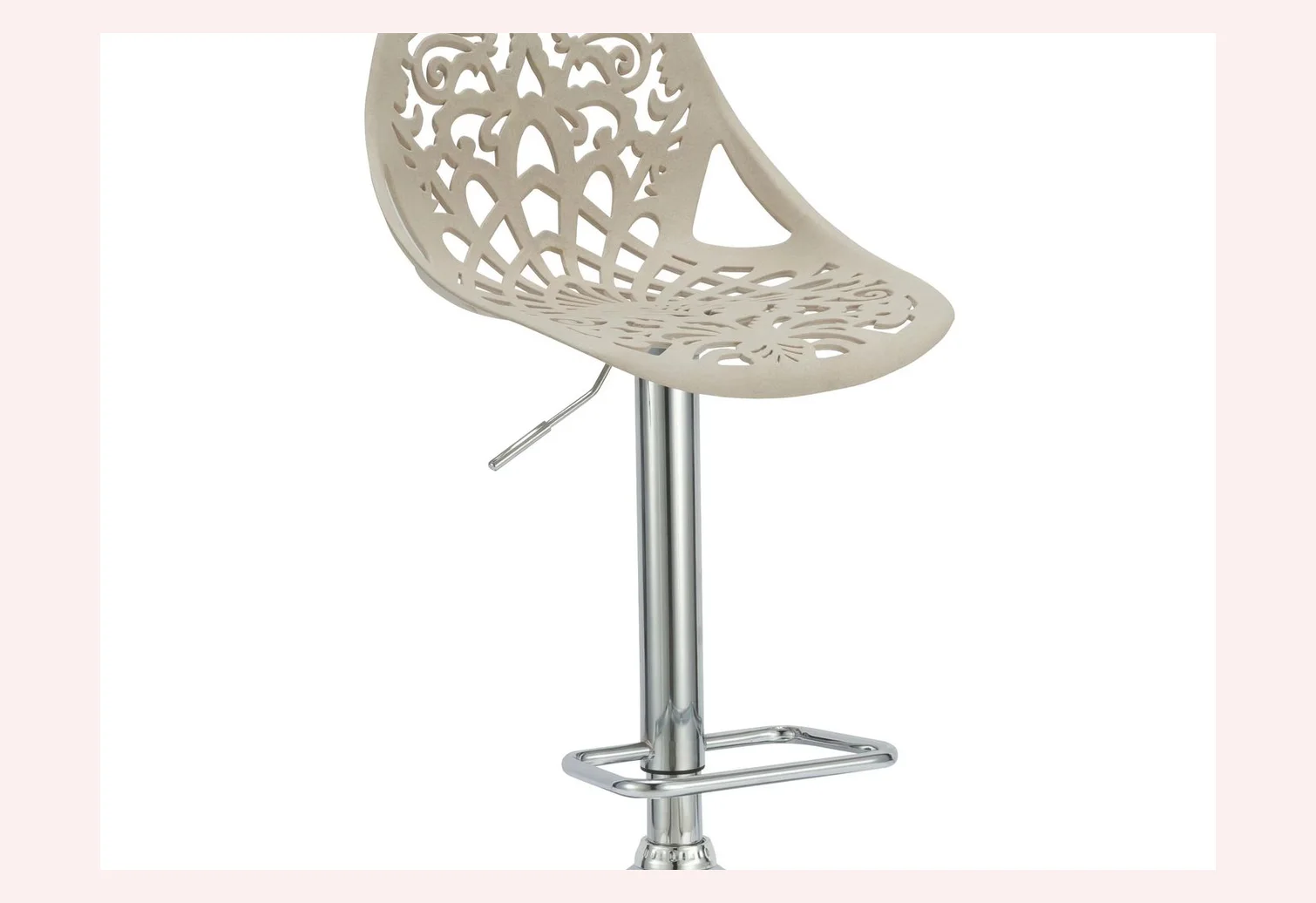
The bare-metal, industrial-loft stool has not gone away — café and home-bar buyers still ask for it most weeks. What trips up an importer is not the shape, it is the finish on the frame. A stool that photographs beautifully can chip, grey out or rust at the footrest within a season if the wrong coating went on the wrong steel. So when we quote an industrial bar stool, the finish is a spec line we argue about, not an afterthought.
The three finishes we actually run
Most metal stools leave our line one of three ways. Powder coat is sprayed dry and baked on, and its real advantage for furniture is colour: the palette is effectively unlimited, and it holds up well against everyday scratching and the spills a bar throws at it. The colours buyers ask for keep landing on the same two — a matte black close to RAL 9005 and an anthracite grey around RAL 7016 — with a brighter accent now and then for a brand.
Chrome (electroplating) gives the bright, reflective leg you see on classic swivel stools. It looks sharp and wipes clean, but a thin or poorly prepped chrome layer pits where moisture sits, and the footrest ring — the part shoes scuff all day — is where it goes first. Galvanizing is the toughest against corrosion because the zinc bonds into the steel rather than sitting on top, but it is grey and industrial-looking and not what most indoor buyers want on a finished stool.
The gauge under the coating
No finish saves a frame that is too thin. The number that matters more than the colour is the wall thickness of the steel tube. A stool built on a thin-wall tube will flex and eventually crack at the welds no matter how good the coating is, and you cannot see tube gauge in a product photo. We specify it on the quote rather than leave it to chance, because a re-order beats a pallet of bent frames every time. On a commercial stool we would rather run a heavier-gauge tube and a slightly higher unit cost than win a quote on a frame that bends the first time someone tips back on it.
The weld is the other place a cheap frame gives itself away. A good industrial stool has clean, fully-welded joints at the seat bracket and the footrest ring, then the coating goes on over the finished weld so there is no bare metal to start rusting. A frame that is spot-welded and lightly coated will show a rust freckle at every joint within a year of damp use. When your inspector checks one of our stools, the weld and the coating coverage at the footrest are the first two things we point them at.
Where the footrest takes the beating
One detail decides more warranty claims on metal stools than the rest of the frame combined: the footrest. It is where every shoe scuffs, every day, and it is where chrome pits and powder coat wears through first. On stools headed for a busy venue we will often spec a stainless or a heavier-plated footrest ring even when the rest of the frame is powder-coated, because protecting the one part that takes the abuse is cheap insurance. It is the same logic we apply across the seating range — spend the money where the product actually fails, not where it photographs well.
The trade-off, stated plainly
Here is the call we put to buyers. For an indoor café or a home breakfast bar, powder coat is the right answer almost every time — the colour range sells the stool, and the moisture resistance covers normal spills. For a covered outdoor terrace or a poolside bar where the frame meets real weather, we push you toward a galvanized base under the coating, or at least a hot-dip step before powder coat, and yes it costs more per unit. The few dollars saved on a plain coated frame in a wet location come straight back as rust complaints. If the stool lives indoors and dry, do not pay for marine-grade protection it will never use.
One honest limit: we are not going to call any finish "rust-proof." We build to BIFMA and EN test methods on our own seating-test equipment, and salt-spray or finish-adhesion testing can be arranged per order if your market needs a number on paper. Tell us the room the stool lives in — indoor, covered terrace, true outdoor — and we will match the finish and the gauge to it.
A last word on colour drift, because it bites importers who reorder. Powder colour can shift slightly between batches if the powder lot changes, so for a brand that needs the same black across two shipments a year apart we keep the powder reference on file and confirm against an approved swatch before each run. A matte black close to RAL 9005 in spring and a faintly different black in autumn is the kind of thing a careful buyer notices on the shelf, and we would rather lock it than explain it later.
If you are speccing an industrial metal line, send us the destination and the look you want and we will quote the finish honestly. Reach the export desk through our contact form or write to [email protected]. How we run a private-label run is on our OEM / ODM page.