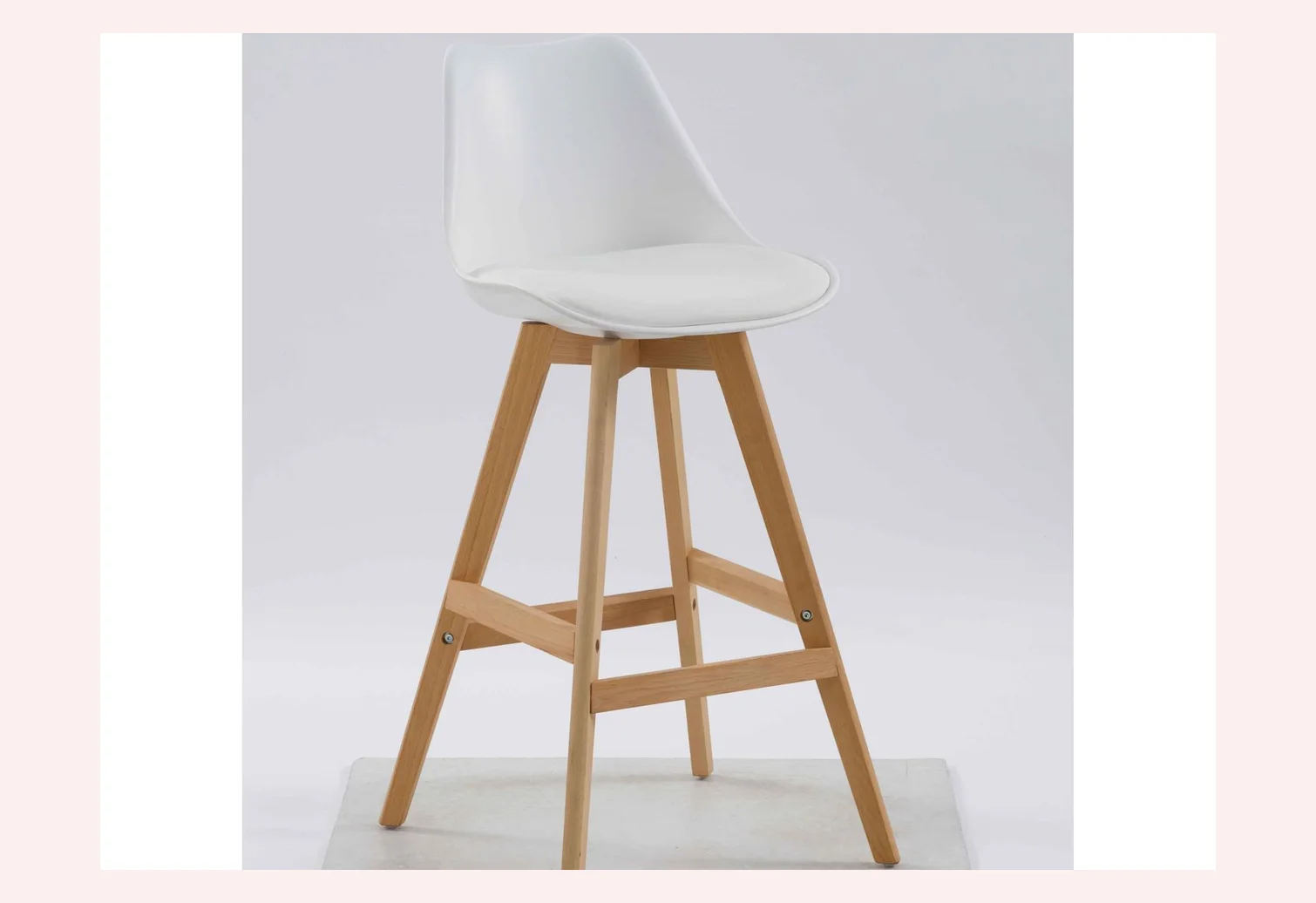
"Should the stool seat be upholstered or solid wood?" We get asked to settle that most weeks, and the honest answer is that neither is better in the abstract. They fail in different ways, and the room the stool lives in decides which failure you can live with. That is the lens we put in front of a buyer before we quote.
How a wood seat ages
A solid-wood or moulded-shell seat is the durable choice: it shrugs off years of daily use, and a scuff can usually be sanded or touched up rather than re-covered. It is also easy to wipe down, which matters in a food setting. The catch is comfort — a hard seat is fine for a quick coffee but punishing for a customer who sits through a long dinner — and wood shows ring marks and heat damage if a venue is careless. For a high-turnover café where people perch for ten minutes, wood is often the right, low-maintenance call.
How an upholstered seat ages
Upholstery buys comfort and a softer, more "designed" look, and it lets a brand pick a colourway. What wears first is the cover. In a commercial bar we steer buyers to a commercial-grade vinyl or PU rather than a delicate woven fabric, because vinyl resists abrasion, wipes clean of spills, and handles the cleaning chemicals a venue actually uses. A pretty domestic fabric on a commercial stool looks tired within a season — that is the complaint that lands in your inbox, not ours.
What "commercial-grade" cover actually means
If you go upholstered, the cover spec is where the order is won or lost, and it is worth a sentence of detail. For hospitality we steer buyers to a vinyl or PU rated for abrasion — the rub count is the number to ask for — and ideally one with an antimicrobial and easy-clean finish, because a bar seat meets spills, sanitiser and the occasional knife edge. A domestic-weight woven fabric might feel nicer in the showroom, but it pills and stains under that treatment and the venue ends up re-covering inside a year. We list the cover grade on the quote rather than writing "PU," because the grade, not the word, is what survives.
Underneath, foam density does the quiet work. A thin, low-density pad feels fine on a fresh sample and then flattens, so the customer is effectively sitting on the board within a season. For a commercial stool seat we quote a foam density you can hold us to, the same way we do on our soft seating, rather than leaving "padded" to mean whatever the cheapest foam happens to be that month.
The hybrid most buyers land on
A lot of our orders settle on a hybrid: a metal frame with a wood seat, or a wood seat with a thin upholstered pad. It is not a fence-sit. The metal-and-wood stool gives you the durable frame and the warm, repairable seat in one stool, and the part-padded version adds just enough cushion for a longer sit without the full maintenance burden of a fully upholstered seat. We build all three off the same bar-stool platform, so you can mix them in one order to suit different rooms in the same project — wood seats at the high-turnover counter, padded seats in the lounge where people linger.
The hybrid also helps the freight. A wood or moulded seat on a knock-down metal frame packs flat and dense; a fully built, deeply padded stool is bulkier and cubes out faster. So the seat choice quietly feeds your landed cost as well as your maintenance bill, which is why we factor it into the loading plan rather than treating it as a pure styling decision.
The trade-off, in one paragraph
Here is the line we give buyers. If the stool sits in a wet, high-traffic bar, go wood or commercial vinyl and keep cleaning simple. If it sits in a hotel lounge or a showroom where the customer lingers and the look sells the room, pay for the upholstered seat — but hold the cover spec to a commercial grade, not a domestic one. The cheapest fabric is the most expensive decision you will make once the re-cover requests start. For the foam under an upholstered seat we quote density rather than writing "padded," for the same reason we list it on our soft-seating quotes: a number you can check beats an adjective you cannot.
Tell us the venue, the traffic and your target landed cost, and we will recommend a seat type and quote the cover and foam in writing. We build to BIFMA / EN test methods and abrasion testing can be arranged per order. Reach us at our contact page or [email protected], or see the range on our products page.