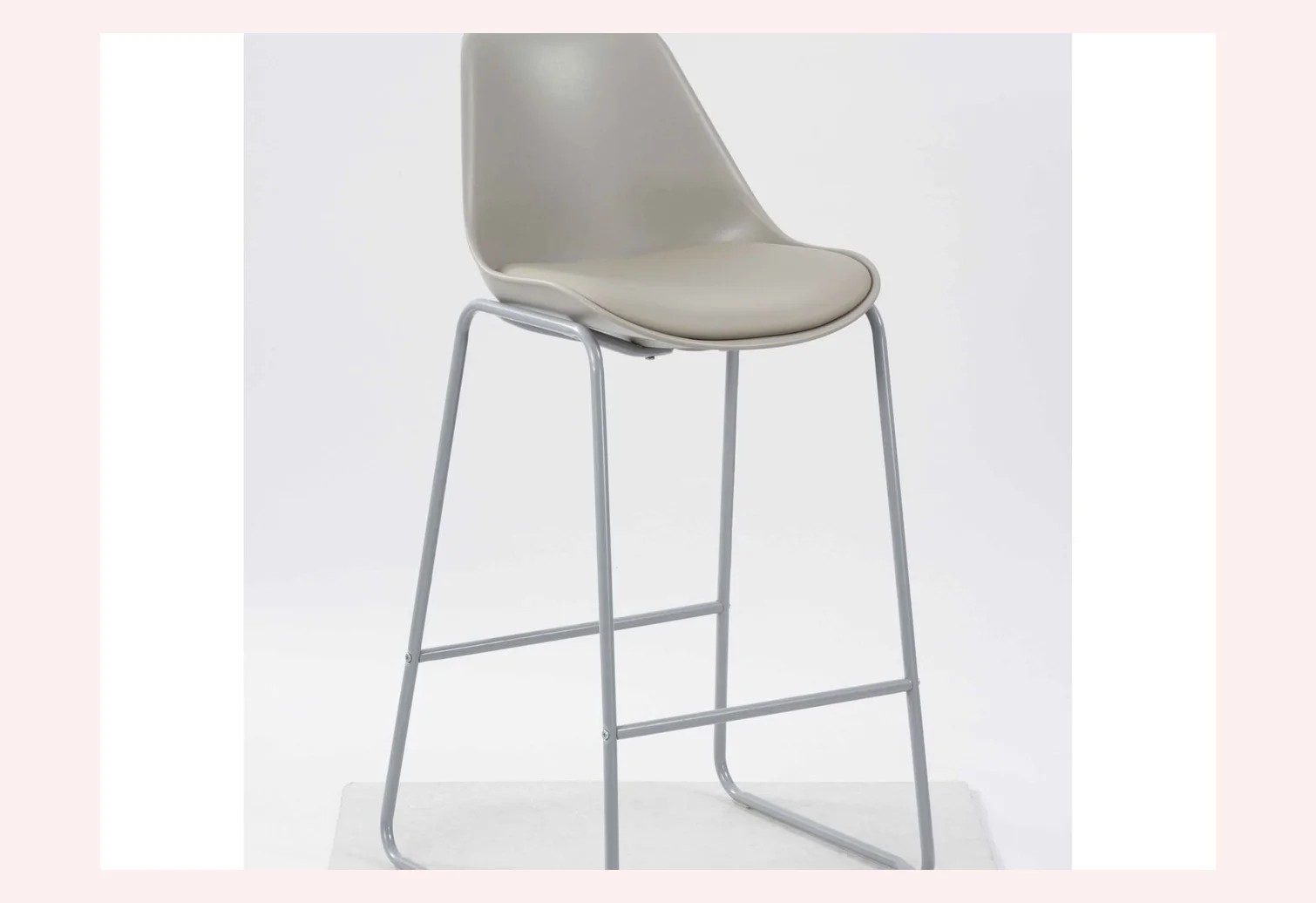
Here is a pattern we see on most stool orders: the buyer interrogates the frame — gauge, finish, weld — and then picks the seat pan from a thumbnail because it "looks right." The pan is the part the customer's body actually touches, and its shape decides whether the stool suits a ten-minute coffee or a two-hour dinner. Different venues need different pans, and choosing by photo is how a cocktail bar ends up with perching stools nobody stays on.
The four pans we actually run
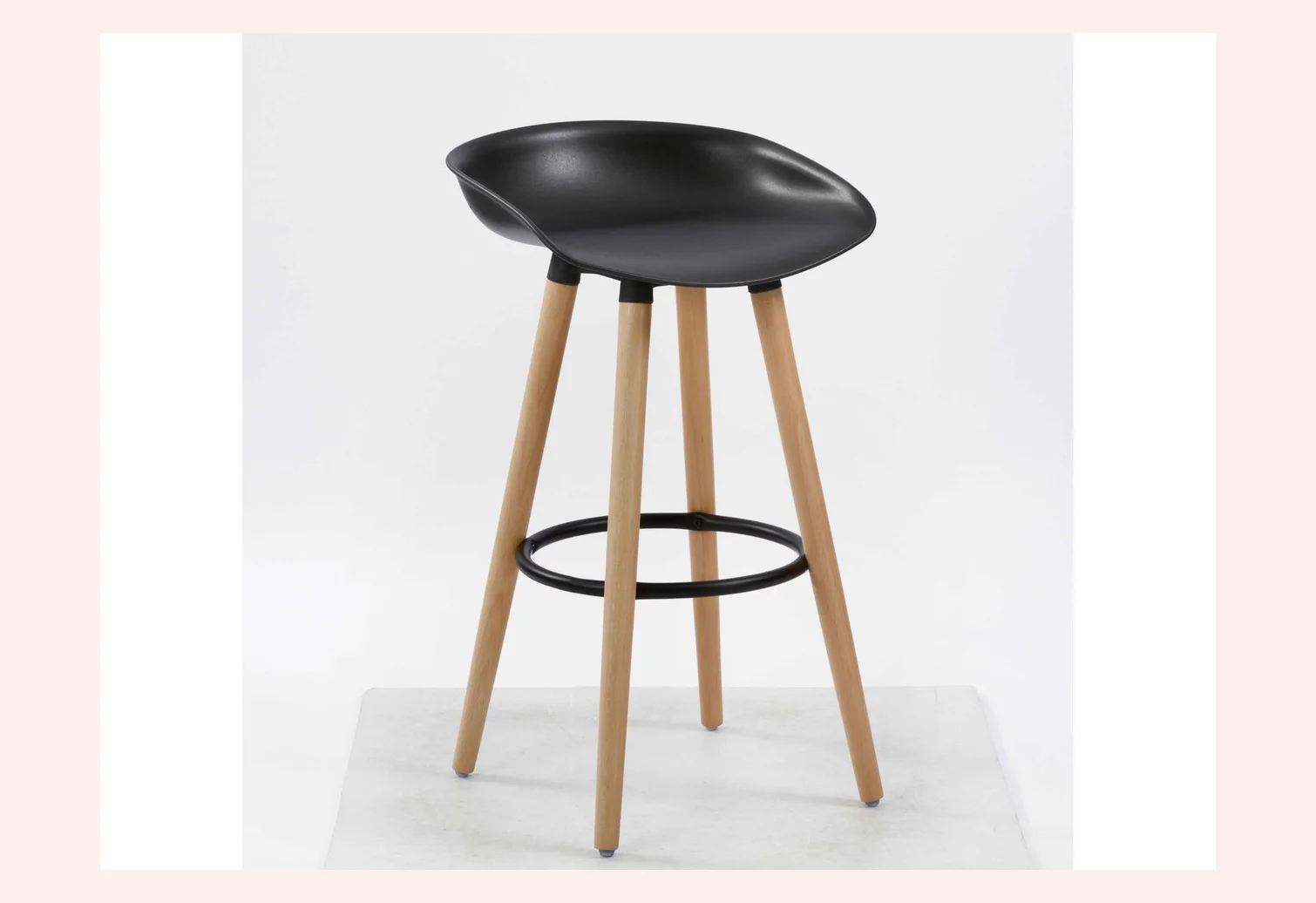
Strip away styling and almost every bar stool carries one of four pans. The saddle or scooped pan dips in the middle and rises at the edges, tilting the pelvis slightly forward — comfortable for a perch, easy to slide on and off sideways. The round flat pan, usually 35 to 38 cm across, is the space-saver: no orientation, so it never looks misaligned in a row, and it tucks fully under a counter. The square or rectangular pan runs wider, typically 40 to 45 cm, and carries more of the thigh, which is what starts to matter past the half-hour mark. And the backed shell — a pan with a moulded or upholstered backrest grown out of it — is really a chair on tall legs, with everything that implies for comfort and for footprint.
Match the pan to the dwell time
The venue question is really a dwell-time question. A quick-serve counter or a standing-adjacent coffee bar turns a seat every ten or fifteen minutes; the saddle scoop is ideal there, because it is comfortable exactly that long, lets people mount and dismount without shuffling the stool, and quietly discourages camping at the counter during the lunch rush — operators know this and some choose it for that reason. A kitchen-island or home-bar stool gets twenty to forty minutes of breakfast and homework; the square pan, ideally with a thin pad, earns its extra width. A cocktail bar or hotel lounge where a guest holds the seat for an hour or two needs the backed shell, full stop — an hour on a backless pan is a complaint, however handsome the stool. And the round pan is the right call where the room is tight and seats must pack close: it gives up some thigh support to buy density and a clean look in a row.
Two shape details matter more than buyers expect, whatever the pan. The front edge should roll away — a waterfall edge — rather than end square, because a hard front edge presses into the underside of the thigh at exactly the height where a footrest cannot fully relieve it. And depth has a ceiling on a backless stool: past about 40 cm of pan depth there is no back to use the depth, so the extra material just stops the stool tucking under the counter.
The trade-offs nobody photographs
Every pan buys something and pays elsewhere. The saddle is cheap to mould, light, and stacks or packs densely — but it commits the venue to short sits, and a saddle in a lounge reads as a mistake within a week of opening. The square pan's comfort costs cube: wider pans mean fewer stools per carton and per container, which shows up in your landed cost rather than the unit price. The backed shell is the comfort king and the freight villain — the back roughly doubles the packed volume against a flat pan, and it adds an upholstery or moulding cost that the seat-material decision then compounds. The round pan's only real sin is the one it advertises: less of you fits on it, and a heavier customer notices.
Mixed venues are the normal case, not the exception. A typical hospitality project takes saddle or round pans at the service counter, square padded pans at the island or communal table, and a handful of backed stools where guests settle in. Because we run all of these off common frame platforms, mixing pans inside one order is a packing-list line, not a second supplier — the same way buyers already mix product lines in one container.
Footrest geometry moves with the pan
One linked detail: the pan shape changes where feet want to go. A saddle perch puts more weight through the feet, so the footrest ring takes a harder beating and wants the heavier spec; a backed shell carries the body like a chair, and the ring becomes more of a comfort bar than a load path. If you change the pan on an existing frame, let us re-check the ring height against the new seating posture rather than carrying the old dimension across — it is a one-line change at the drawing stage and a complaint generator after delivery.
How we spec it on a real order
Tell us the venue and the expected dwell time and we will recommend the pan before we talk styling — it narrows the catalogue fast and stops the thumbnail-driven mistake. On the sample, sit on it for the real duration: ten minutes for a saddle is meaningless if your customers sit for fifty. We check pan edge load and stability on our own seating-test bench, we build to BIFMA and EN test methods, and testing can be arranged per order if your market wants the number on paper. The pan shape itself we will argue about honestly, because a returned container of wrong-for-the-venue stools is more expensive than one frank conversation at the quote.
Send us the venue type, the dwell time and the counter height, and we will map pans across the order — with the carton count for each so the freight math is visible. Reach the export desk via our contact form or [email protected]; the full range is on our products page.